
・How to Identify Bleached Anemones
・Two Methods for Helping Them Recover from Bleaching
Introduction
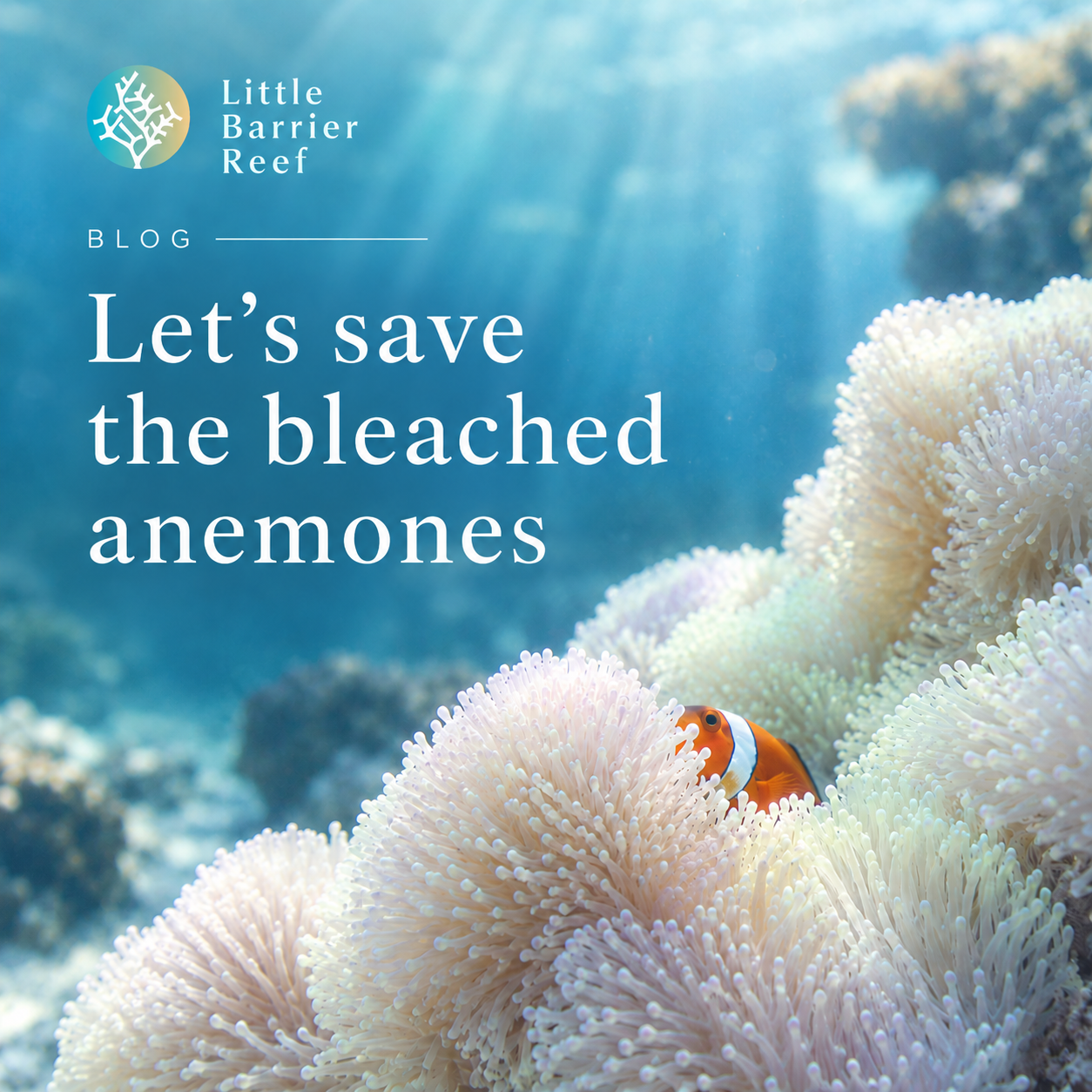
The Stichodactyla gigantea I’ve been posting about regularly on Instagram has turned white…
It wasn’t until I suddenly noticed its color had faded during my daily routine that I realized it was already too late. It had turned into a pure, creamy-white anemone.
I’ve had anemones I bought in the past turn white and then recover twice before, but this is the first time I’ve caused a healthy anemone to turn white.
Hey you over there—you might be thinking, “I don’t keep marine aquariums, so this doesn’t concern me!”
Whether you’re wondering, “An anemone bleaching?” or thinking, “Well, it’s actually kind of pretty,”
please give me a moment to help you understand the phenomenon of “anemone bleaching.”
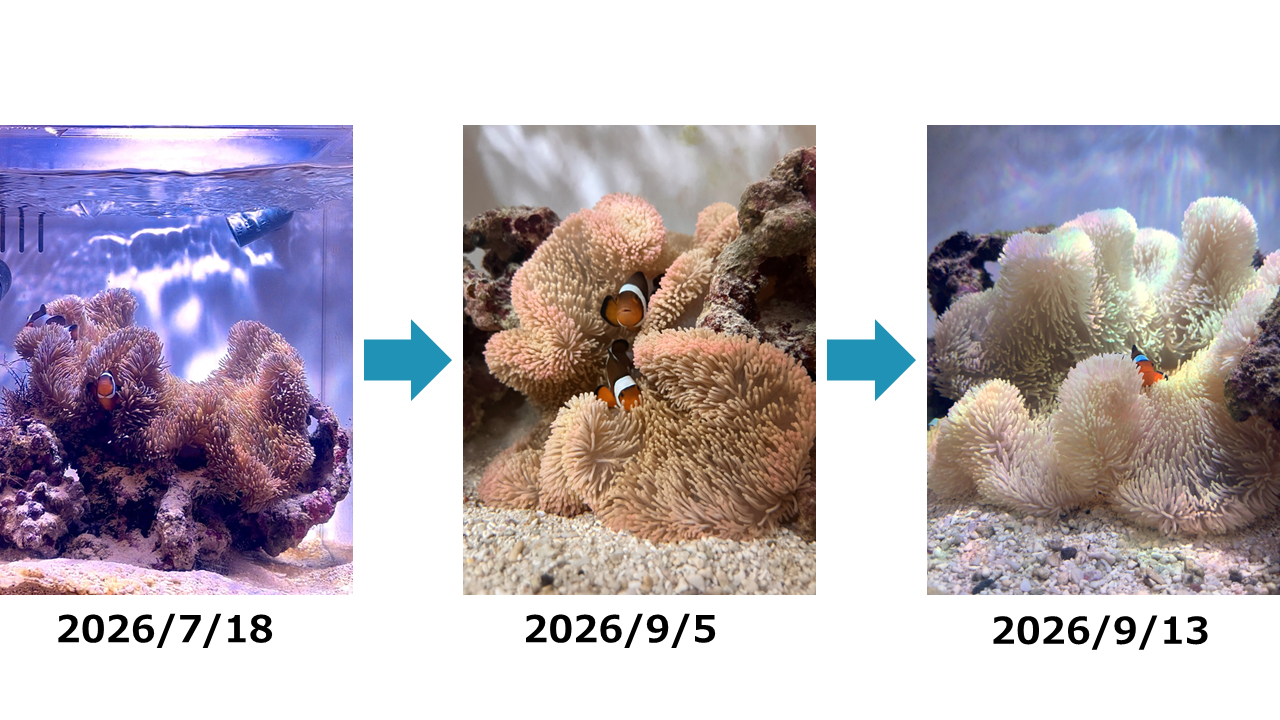
Huh? I thought it looked a little faded, but in just one week since September 5, it’s turned completely white.
What Is a Healthy State, Anyway?
That's right—healthy sea anemonesaren't white to begin with.
Even the “ Heteractis crispa,” which has “white” in its name in Japanese, is often seen in light brown in the wild.
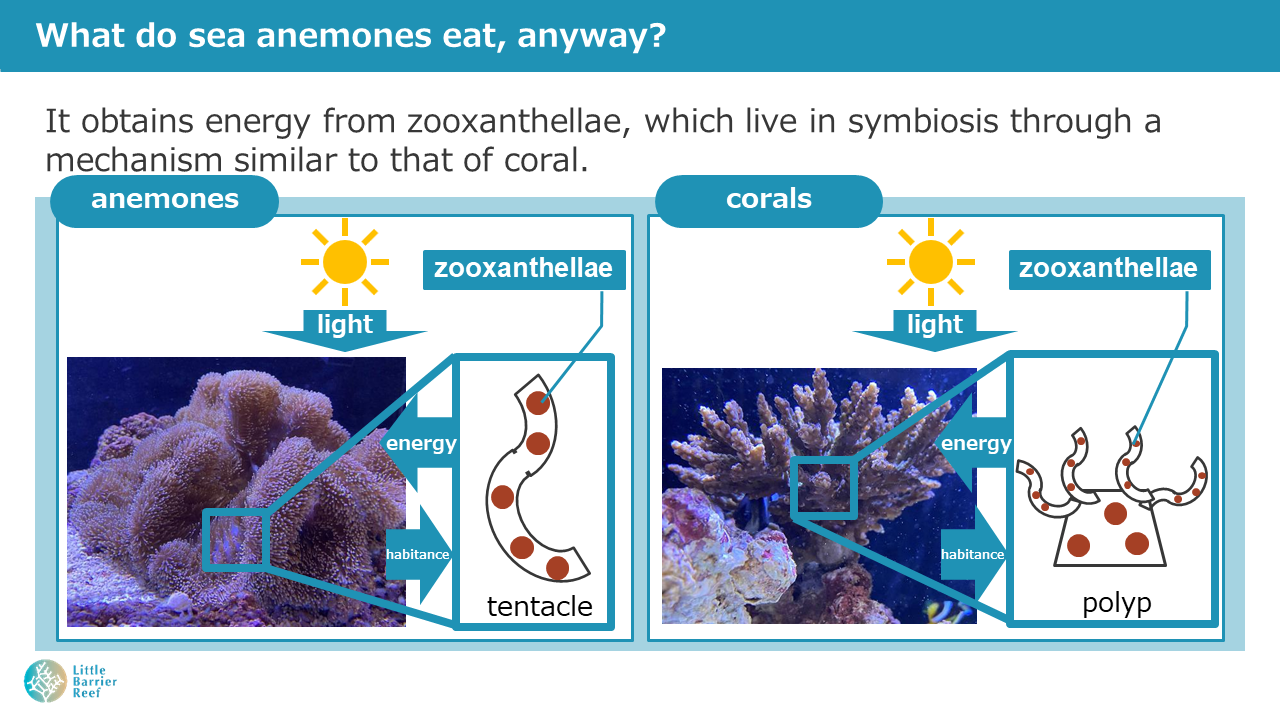
This color comes from zooxanthellae, a type of phytoplankton that lives inside their tentacles.
Anemones obtain the energy they need for daily life in one of two ways: either by receiving energy produced through photosynthesis by these zooxanthellae, or by directly consuming energy from fish and shellfish they have caught themselves.
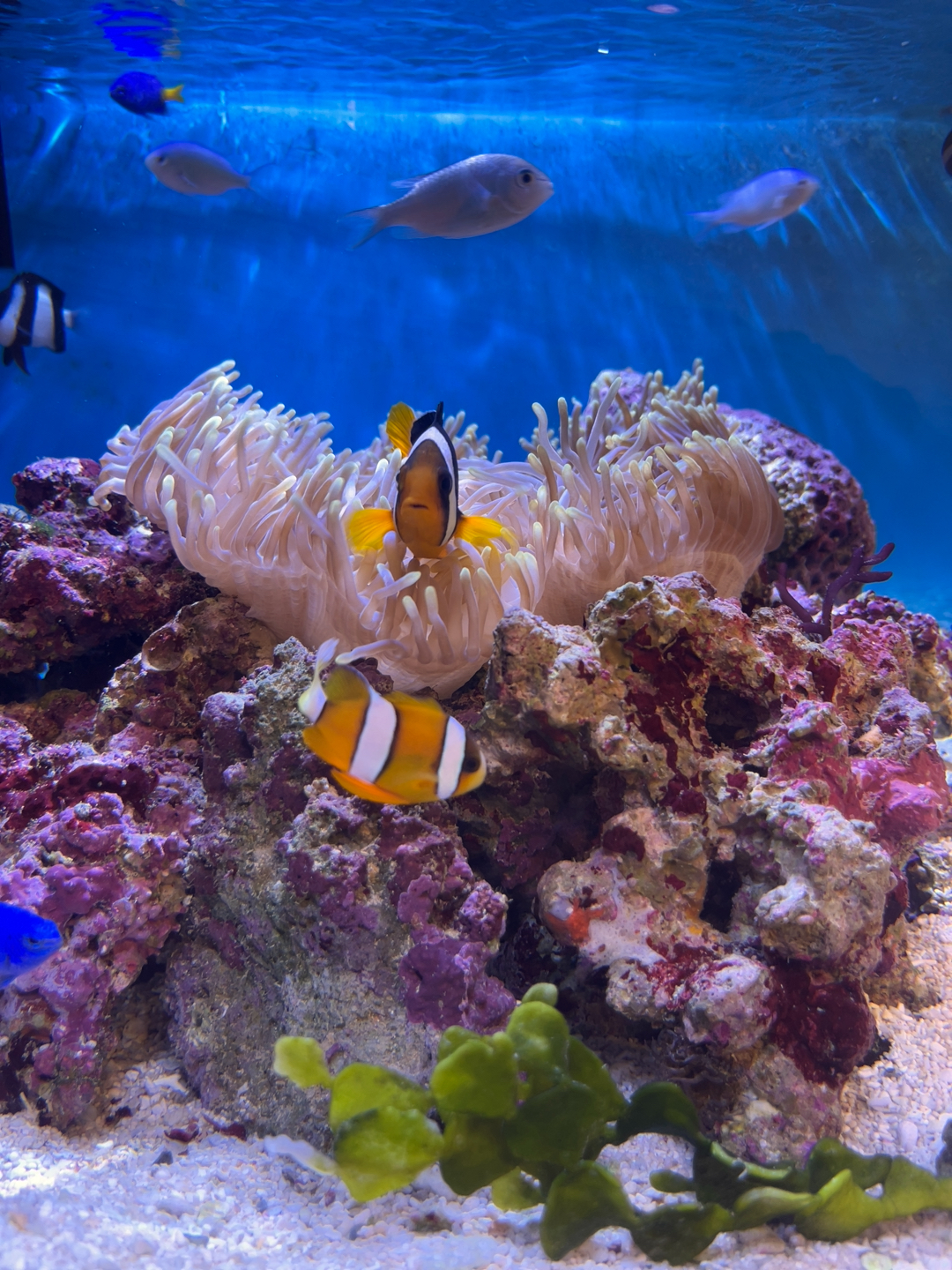
To get an idea of what an anemone looks like when it has plenty of zooxanthellae,
please watch this video of the Heteractis magnifica keep in my main tank.
As you can see, it was much lighter in color when it was first introduced (see image below) than it is in the video.
It may be hard to believe, but this is the same specimen.
The Stichodactyla gigantea that has turned white this time (the same specimen as in the thumbnail at the beginning) was a healthy brown color just two months ago.
So, what exactly is bleaching?
Bleaching refers to the expulsion of zooxanthellae—a type of phytoplankton that lives inside the tentacles, as explained earlier.
As an aside, this phenomenon is also observed in corals, which are members of the same phylum (Cnidaria), and it is the underlying cause of what is commonly known as“coral bleaching.”.
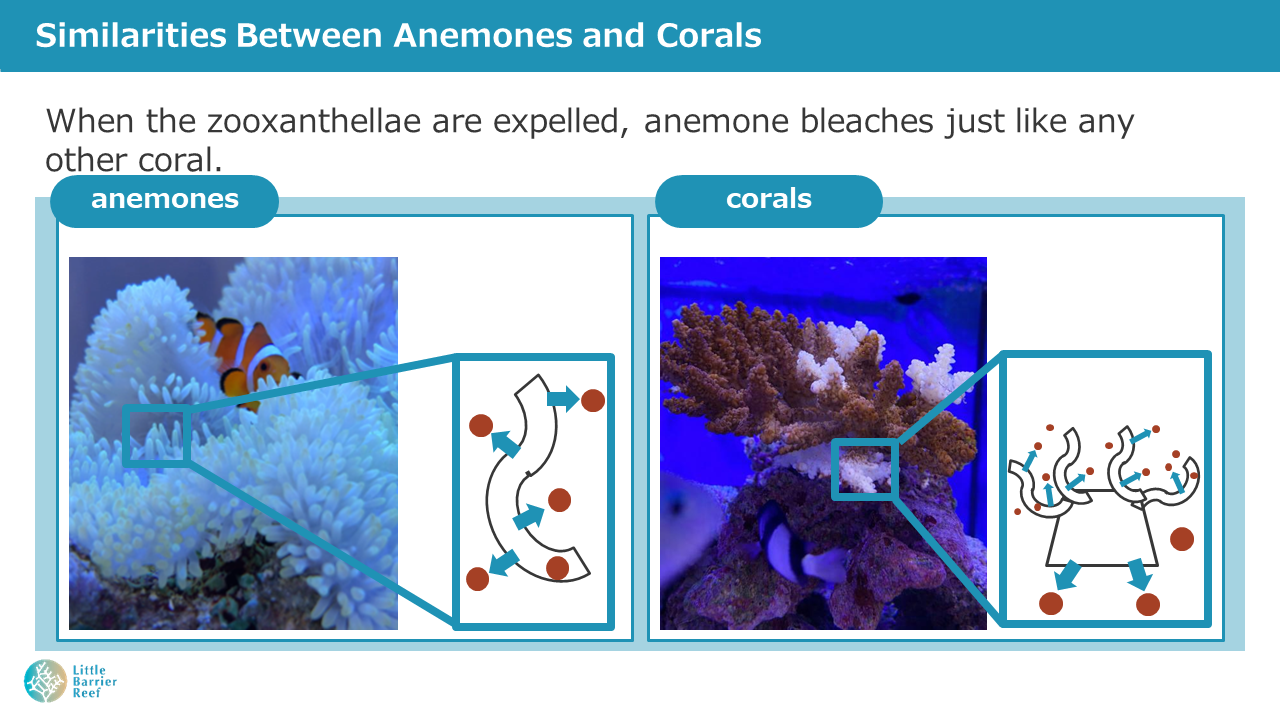
However, the important point here is that sea anemones, just like corals, can also bleach.
A bleached sea anemone is by no means “beautiful”;it is actually unwell.
Two methods I know of for treating bleached anemones
As long as the specimen is healthy, it won’t die even if it turns white.
As a general rule, “healthy” means that since you brought it home, it has never kept its mouth slackly open or swollen and deflated multiple times a day.
This is a common criterion often mentioned when purchasing sea anemones, and since many people have already explained it, I won’t go into detail here.
I will now discuss methods for treating bleaching,but please note that this method will not be effective for specimens that are already in poor condition.
Many of the specimens available at pet stores are already bleached and tend to be frail.
I want to reiterate that while this is a method to treat bleaching, it is not a way to restore individuals that were already in poor condition.
Let’s get back to the main topic. If bleaching means that the zooxanthellae have been expelled, then the solution is simple: we just need to find a way to get the zooxanthellae back into the anemone. The two methods I’ll introduce next are approaches for attempting recovery, assuming you have a healthy anemone separate from the bleached one.
1.the method published on Reef2Reef
This method involves cutting off the tentacles of a healthy sea anemone and feeding them to a bleached sea anemone so that the bleached anemone absorbs the tentacles along with the food. It appears he was feeding the tentacles along with frozen salmon.
Signs of zooxanthellae acquisition were observed two weeks after tentacle absorption, and eventually, overall browning and an increase in tentacle length were confirmed.
Since I can't use his photo directly,please check the link provided for more details
...
2.Getting Zooxanthellae by Keeping Them in the Same Tank with Healthy Sea Anemones
This is a method I observed and discovered while keeping Stichodactyla gigantea for nearly five years.
As mentioned earlier, rather than having the anemones acquire zooxanthellae directly, this method involves having them acquire zooxanthellae indirectly from healthy anemones in the same tank.
There’s nothing particularly special you need to do; you simply keep the bleached anemone and a healthy anemone together in the same tank.
It took a little over a year for the anemone to make a full recovery using this method.
I’ve compiled a detailed record of the process on a separate blog, so please check it out there.
Key Points and Considerations for Recovery from Bleaching
In any case, the important point here is that bleached sea anemones must somehow reacquire their zooxanthellae and regain their brown color.
Once it has turned brown, if the tentacles continue to grow thin and long, it can be said to have fully recovered.
This is just speculation on my part, but even if you don’t have a particularly healthy sea anemone (since I don’t think many people keep two sea anemones at home), I believe that, in theory, you can still provide nutrients to a bleached sea anemone and keep it alive as long as you feed it regularly.
However, further research is needed to determine whether recovery is impossible forever unless the anemone receives zooxanthellae from another anemone. (To the naked eye, it appears as though all the zooxanthellae have completely disappeared, but would it be possible to confirm, using a microscope, that a tiny amount remains? If even a single one remains, I think it’s entirely possible for the zooxanthellae to gradually multiply again...)
This time, I’d like to try the recovery method described in Method 1.
I took a few tentacles from a healthy Heteractis magnifica in my main tank (sorry about that (>_<)) and mixed them in with some salmon to see if the bleached Stichodactyla gigantea would eat them.
Stay tuned
Unfortunately, we were unable to identify the direct cause of the bleaching this time. In this tank, we did not use a chiller and had not performed water changes for about a month in order to test the filtration capacity. Therefore, it is possible that the fish exhibited a stress response to environmental changes and water quality.
In any case, I bought this Stichodactyla gigantea from a shop that sells them in excellent condition, so I'm not too worried.
I’d like to continue monitoring the situation while keeping a record of my observations.
*Update: October 3, 2026
It has been about two weeks since I began feeding the Stichodactyla gigantea with the tentacles of the Heteractis magnifica along with salmon.
Since Reef2Reef had already observed signs of zooxanthellae re-establishment within two weeks, this result differs from my expectations.
To speed up recovery even slightly, I moved the Heteractis magnifica into the same tank and decided to keep it in the same environment as the Stichodactyla gigantea for a while.